Five Underrated Fruko y sus Tesos Songs You Need to Hear
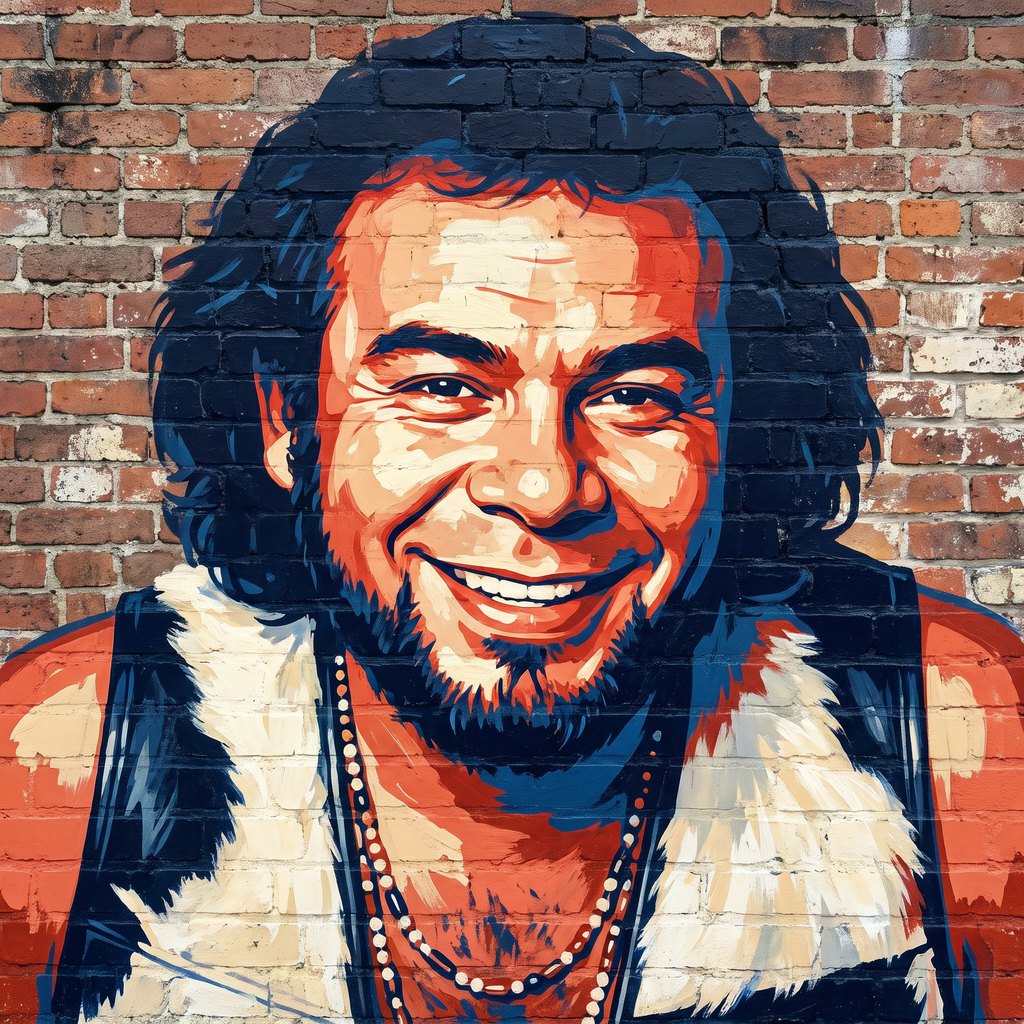
In my last article about Joe Arroyo, I decided to skip the Fruko years and deal with them on their own. Unfortunately, I had forgotten how prolific and amazing Fruko y Sus Tesos were. Going back over their catalog, I rediscovered songs that I'd completely forgotten about. And I really wanted people to hear them. That's why I decided to make this list a little different.
Instead of giving you the classics that you already know, what I want to do here is give you some of the underrated bangers that you may not hear as much. The sleeper hits that deserve way more credit than they get. Not to take anything away from those songs. But are you really getting anything out of this if I recommend El Preso or Cachondea one more time?
So with that said, this is the list of songs that I'm excluding:
- El Preso. Their absolute biggest, most universal anthem. Wilson "Saoko" Manyoma, 1975.
- Cachondea. Their massive, high-energy dancefloor hit from the turn of the millennium. A 2000 cover of the Joe Cuba Sextet tune, sung by Daniel Silva.
- El Ausente. One of Joe Arroyo's most famous tracks with the band, and his first. 1973.
- Los Charcos. An essential dancer favorite sung by Wilson "Saoko" Manyoma. 1975.
- El Caminante. A massive classic, heavily requested at salsa events. Joe Arroyo, 1974.
- Tania. One of Joe Arroyo's defining early masterpieces, and his first composition. 1974.
- Manyoma. A widely known, signature uptempo track. Arroyo singing Fruko's tribute to Saoko. 1975.
- El Cocinero Mayor. A prominent hit featuring high-octane brass and vocals. Joe Arroyo, 1978.
- A la Memoria del Muerto. A staple party track featuring Piper Pimienta. 1972.
If you haven't heard any of these, by all means, go listen to them right now. In the meantime, here is my list of five sleeper Fruko hits you need to hear.
But before we get to all that, let's talk a little bit about the man himself.
Julio Ernesto Estrada, aka Fruko, was born in Medellín in 1951. When he got kicked out of school, his family got him a job at Discos Fuentes, the biggest record label in Colombia. Not as a musician, but as a messenger. He would pack records and sweep the studio floor, and at night, he taught himself music by playing with all the different instruments laying around the building. By the time he was 15, he was the timbalero in Los Corraleros de Majagual, and by 1968 he was playing with them in New York. He was intoxicated by the sounds of Richie Ray, Willie Colón, Ray Barretto and Eddie Palmieri and by 1970, at the ripe old age of nineteen, he had his own band.
He got his name from a Colombian tomato sauce brand. There was a neon sign of its mascot near the Plazuela Nutibara in Medellín and the story goes that Lisandro Meza looked at the sign, looked at the kid, and told him "Tú eres Fruko, esa muñequita es igual a ti."
The name stuck.
Fruko built more than just a band though. What he created was a movement. Fruko was the first Colombian orchestra to play Madison Square Garden.
And it got there on the strength of a generation of legendary singers.
Piper Pimienta (whose daughter is still singing today!)
Joe Arroyo.
Wilson "Saoko" Manyoma.
A pantheon of greats.
Which is why selecting only five songs is such a difficult task and why I may have to revisit this with additional songs in the future.
OK, enough talking. Here's the list.
1Si Yo Encontrara Un Amor (1975)
not in the Salsa Rob catalog yet
Fruko El Grande, Discos Fuentes 201011. Vocal: Wilson "Saoko" Manyoma.
This song is actually a cover. The earliest recording anybody has been able to find is Yayo "El Indio" singing it with Charlie Palmieri's orchestra at the Tico-Alegre All Stars concert at Carnegie Hall in May 1974. Fruko cut his version a year later for El Grande, the same album that gave the world El Preso.
Normally, I wouldn't include a cover in a list like this because there's so many originals that deserve attention.
But this song is such a banger, there is zero chance I could exclude it. Not only is it better than the original, it redefines the reference for this song. This is the definitive version of that song.
This song is a pulse check. If they play this and you get up and dance, you're probably dead.
This song is proof that love songs don't have to be sappy and weak. They can be powerful and passionate. That's how I love. And that's why I love this song.
If you're dancing to this, play it cool until the break at 1:29, then LOSE YOUR MIND. Also, the piano solo on this is exquisite.
2El Árbol (1974)
→ this song in the Salsa Rob catalog
El Caminante, Discos Fuentes 200945. Vocal: Joe Arroyo. Written by Isaac Villanueva.
This one's an original, and it's still in the setlist fifty years later. When Fruko played Estéreo Picnic in Bogotá in 2024, and again in Madrid that fall, this was the closer. Not El Preso. This.
It was written by Isaac Villanueva, who was the in-house composer at Discos Fuentes. He also wrote El Ausente, which was Joe's first record with the band. When Villanueva died in January 2024, Fruko told El Heraldo that El Ausente was the first Villanueva song he ever recorded and El Árbol was the second, and that the band would honor him every time they played his songs. He told another paper that Villanueva was Joe Arroyo's godfather in the business, the guy who brought him in.
So the man who wrote the first Joe Arroyo hit also wrote this. Not a coincidence.
The lyric is a metaphor that shouldn't work and does. Love as a tree that nobody watered. He's telling her the tree of what they had dried up, and it's her fault, and all that's left is ash. Delivered by an 18 year old Joe Arroyo, it's devastating.
It's all fun and games until 2:15, then you're fighting for your life. Don't paddle out to these deep waters unprepared.
3Pobre Nací (1976)
not in the Salsa Rob catalog yet
Fruko El Bárbaro, Discos Fuentes 201103. Vocal: Joe Arroyo. Written by Álvaro Velásquez. Arranged by Luis Carlos Montoya.
El Bárbaro was the first Fruko album where every single song was an original. No covers, no Cuban tunes with the credits scraped off. Ten different composers, and for the first time the label printed who arranged every track. It came out in May 1976, and this is the last song on it. Five minutes long.
It was never a single.
It was written by Álvaro Velásquez, the percussionist who wrote El Preso. The guy who wrote the biggest salsa song in Colombian history also wrote this, a year later, and almost nobody knows it exists.
Like El Preso, this is a song of struggle and strife, about a man born into an uncaring world with no future and no prospects, only loved by his mother.
It's a lament that parallels the life of its singer, a twenty-year-old Joe Arroyo who grew up in the red light district of Cartagena and knew precisely what he was talking about.
This is a deeply emotional cut, full of longing and desperation, perfectly captured by the poignant tenor voice of Joe Arroyo.
Don't think about this one too much. Just let it take you over and experience the catharsis for yourself.
4Descarga Fruko (1972)
not in the Salsa Rob catalog yet
A la Memoria del Muerto, Discos Fuentes 200685. Instrumental. Luis Carlos Montoya and Fruko.
Descarga = JAM. If you're going to dance to one, you better be hydrated. Descargas are like hip hop cyphers. You drop the beat and then everybody gets their turn to rip. The Cubans "invented" descargas in the fifties, and every salsa band worth anything has at least one on record.
This is Fruko's.
For the song itself, here's what we know.
Fruko says Hernán Gutiérrez was on piano. There were three trumpets, one by a guy who went by George Saxon. Saulo Álvarez was on trombone. Rafael Benítez was on timbal. The Villegas brothers were on conga and bongó. Fruko was on bass, arranging and directing. And singing in the coro, a teenage Joe Arroyo. The composer credit is Luis Carlos Montoya, the Fuentes house arranger who later wrote the arrangement for El Preso. Montoya is credited with the music and Fruko with the lyrics.
As far as dancing goes, this song pops off at 0:27, and goes hard all the way to the end. There will be various solos and instruments featured throughout, so make sure to switch with the music. Versatility is your friend.
5Pa' la Rumba (1973)
→ this song in the Salsa Rob catalog
La Fruta Bomba, Miami Records / Discos Fuentes MFS-3210. Vocal: Joe Arroyo. Written by Fruko and Michi Sarmiento.
This song was never sold in Colombia.
Literally.
La Fruta Bomba was an album Fuentes made for the Cuban market in Miami. According to an academic study of this band's discography, it wasn't released to the Colombian public at all. So if you were in Medellín in 1973 and wanted this song, you had to get it as the B-side of a 45 called Canto a Panamá.
Joe Arroyo was supposedly seventeen when he sang it, maybe even sixteen and this song is among the first handful of recordings he made for Discos Fuentes. The story is that Michi Sarmiento, a saxophonist from Cartagena who ran his own Fuentes band called the Combo Bravo, was in Medellín arranging for Fruko when Joe got brought in, and the co-write between Fruko and Michi is on the 45. Joe had already sung with Michi's band before Fruko found him, so the three of them had history.
One of the distinguishing features of this song is the reverb that they put on the chorus. Check it out when you listen to it.
+1Pajarillo (1975)
→ this song in the Salsa Rob catalog
Fruko El Grande, Discos Fuentes 201011. Vocal: Joe Arroyo. Written by Álvaro José Arroyo.
This song is incredibly underrated.
If you try to find it on Spotify, you're going to have to scroll down 79 slots before you see it. El Preso, which is on the same record, has a hundred and fifty million streams. Pajarillo has about a hundred and sixteen thousand.
That's not an indictment of the song. It's an indictment of the listeners. A song this good deserves so much more attention.
A few things about the song.
This is not the Venezuelan joropo. There are a hundred songs called Pajarillo and most of them are llanero music. This isn't one of them. This is a Joe Arroyo original, one of three he wrote for El Grande along with Amada Ven and Flores Silvestres, and it's buried at the end of side two of one of the most famous salsa albums ever made.
A Cartagena writer named Germán Mendoza Diago described what it was like growing up with this album. He said Pajarillo was the most characteristic salsa on the whole record, but he never saw anybody ripping it until years later in Cali.
The lyric is Joe at his most poetic. He's singing to a nightingale, a pilgrim bird crossing green fields, and underneath it the song is about seasons turning and a life running its course. He was nineteen. The song was such an afterthought that nobody at Fuentes even bothered to write down who arranged it.
Or whoever that was, thank you.
This song takes a little bit more patience to dance to than the rest of them. Just flow with it. But be ready because when it drops at 2:37, it's ON!